Learn more about the AI Innovation Center or explore the broader AI & Software ecosystem at High Tech Campus Eindhoven, including our tech cluster map featuring 60+ companies.
To overview
Moving from vibe coding to impact: Lessons from the AI Implementation Track at this year’s AI Summit Brainport

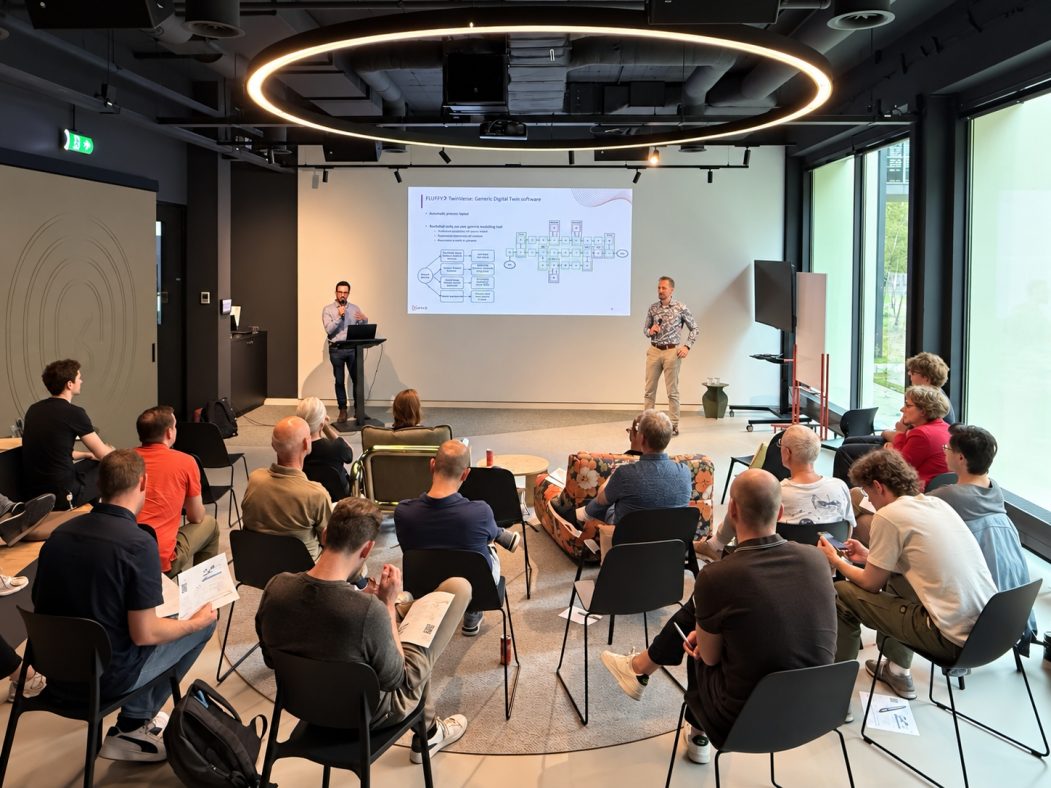
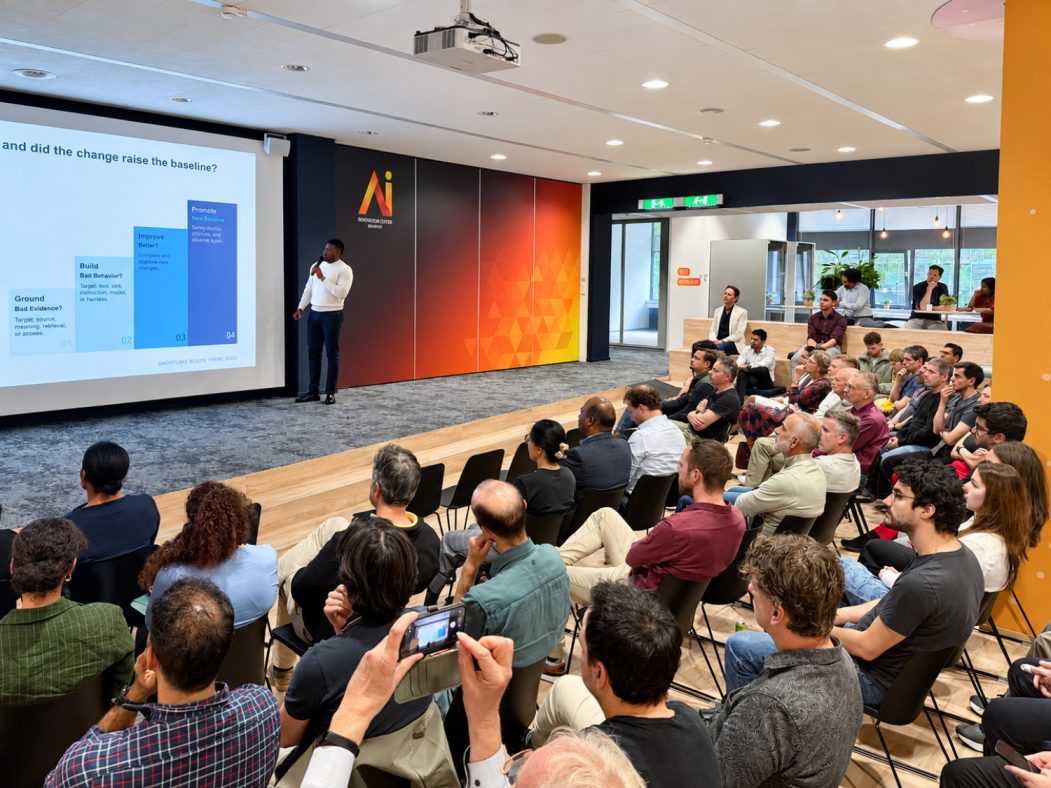
The iconic dome of Eindhoven’s Evoluon was completely sold out and packed to capacity as professionals from science, industry, and startups gathered for the fifth edition of the AI Summit Brainport. Centered around this year’s urgent theme, “AI at work. Use it or lose it?”, the AI Implementation Track, curated and hosted by the AI Innovation Center at High Tech Campus Eindhoven, tackled the single biggest hurdle facing organizations today: moving beyond isolated experiments to scalable, trustworthy production.
Moderated with high energy by Leanne Joseph, the track opened with Philipp Werle, Innovation Manager Emerging Tech at High Tech Campus Eindhoven. Celebrating five years of the AI Innovation Center, which now houses roughly 40 companies under one roof within a 300+-company Campus ecosystem, Werle highlighted Brainport’s unique “golden nugget”: combining deep-tech hardware know-how with software expertise. He also announced the launch of the complete AI & Software tech cluster overview, featuring more than 60 companies on High Tech Campus Eindhoven.
Rethinking workflows, not just patching them
Setting the corporate tone, Frank Wartena, program manager for AI Transformation at Philips, shared lessons from rolling out the company’s internal AI Accelerator over the past 18 months. Operating under the motto “People-led, AI-powered,” Philips has accelerated more than 30 Minimum Viable Products (MVPs) across its engineering divisions, from automating recyclability assessments on Bills of Materials to extracting chip pin data from supplier PDFs.


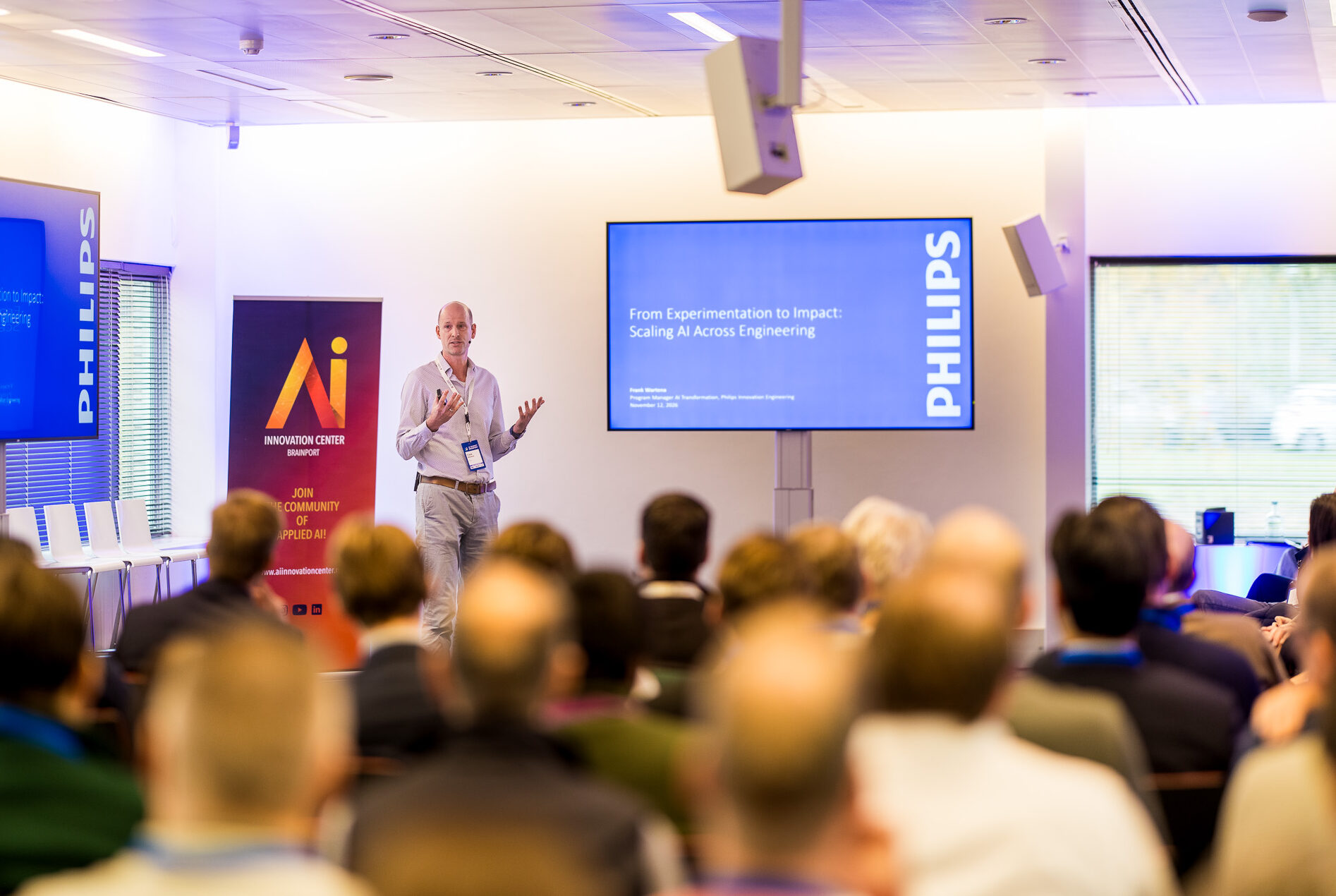
Wartena’s core warning to the room was clear: do not merely use AI to speed up existing steps, or you will simply create new bottlenecks. Instead, organizations must reimagine entire workflows end to end. “Start now, because there is no point in waiting; you can wait forever,” Wartena urged, emphasizing that transformation must be owned directly inside the engineering departments rather than dictated by a central ivory tower.
Three honest takes: Builders, investors, and corporates
The morning’s panel brought candid realism to the stage, featuring Theresa Voß (Co-founder & CCO at corporate learning platform Chunkx), Marcel Rijnsburger (Senior Director AI Change & Literacy Lead at NXP Semiconductors), and Meron Mekonnen (Investment Manager & Head of Legal at LUMO Labs).
- The Builder’s View: Voß noted a major shift in corporate buying behavior. Eighteen months ago, companies wanted quick AI pilots; today, they demand deep workflow integration, quality assurance, and personalized upskilling rather than “one-size-fits-all” tools.
- The Investor’s View: Mekonnen revealed that while LUMO Labs sees hundreds of AI pitches a week, fueled by founders who can now build prototypes overnight, investors are strictly avoiding “thin wrappers”. With AI shortening competitive lifespans, startups must prove they have a deep, defensible moat, whether in proprietary data, distribution, or the team itself.
- The Corporate View: At NXP, where protecting intellectual property is paramount, Rijnsburger explained that AI adoption isn’t about replacing staff, but shifting human value upward. “When producing code and documents becomes cheap, human investment moves to validation, building trust, and judging output,” he noted, adding that companies must closely guard token costs against actual return on investment.

Fighting crime and designing for humans
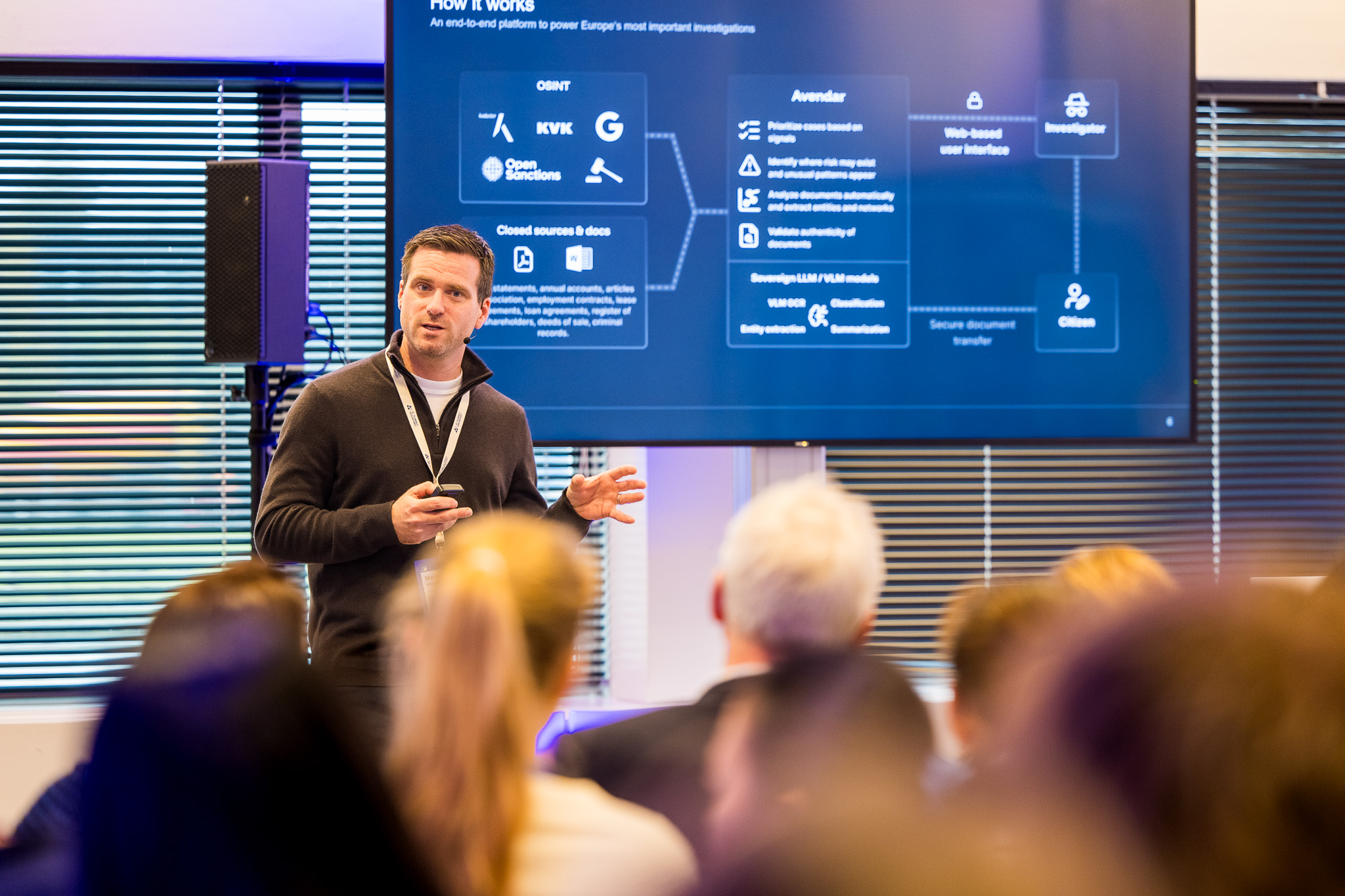
Before the lunch break, Marijn van Aerle, CEO of startup Avendar, demonstrated how AI is helping police and public-sector investigators cut through massive, 900-page criminal and financial dossiers. By keeping tasks strictly scoped and ensuring every AI-flagged anomaly links directly back to verifiable source documents, Avendar mitigates automation bias while complying with strict frameworks like the EU AI Act.
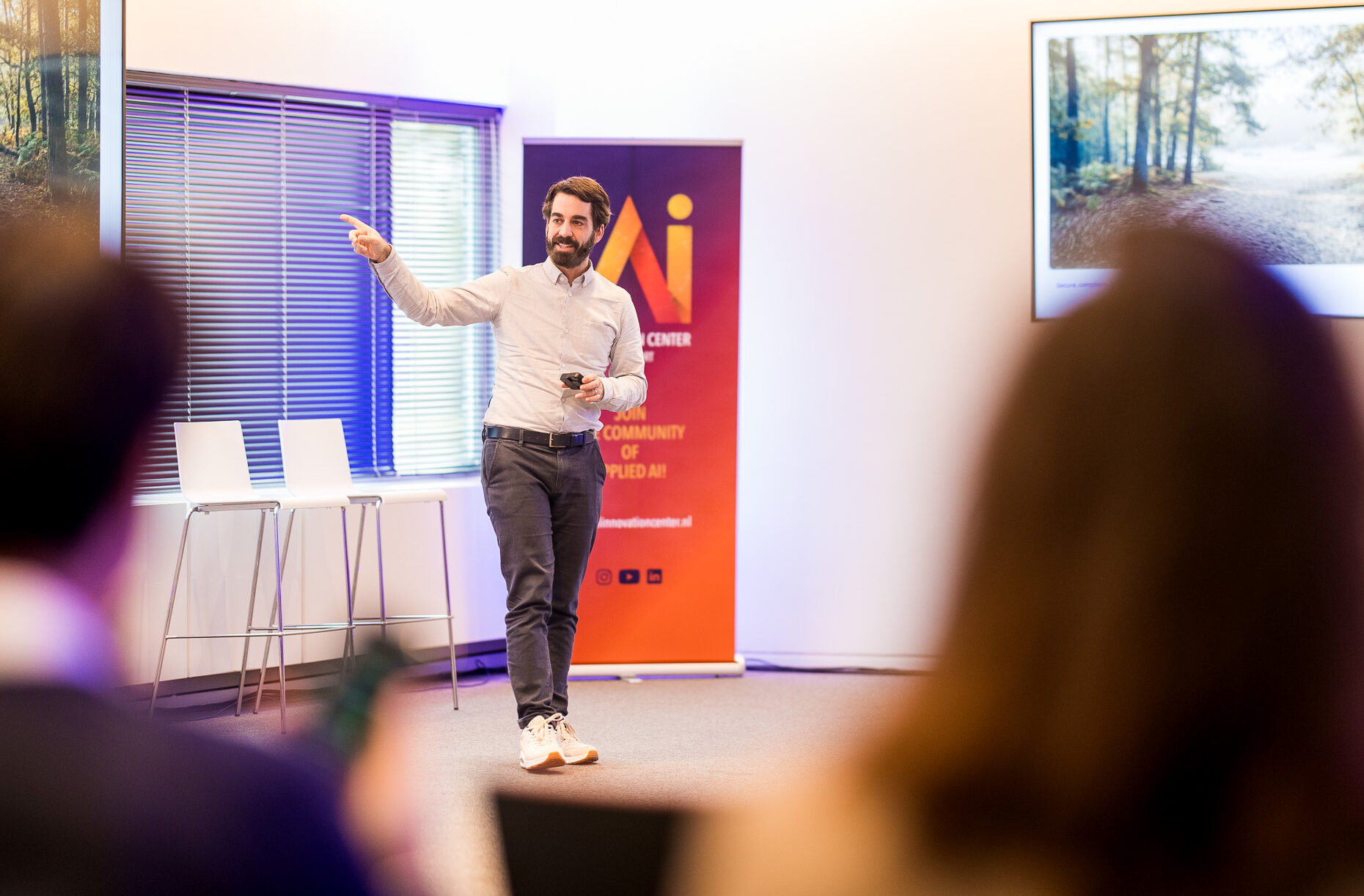
Re-opening the afternoon after a lively networking lunch, Koen de Greef, Head of Design Services at FIDDS, delivered a memorable reality check on user experience. Sharing a story from his early days bouldering in the Forest of Fontainebleau, De Greef recalled exhausting himself trying to climb a rock before a friend asked: “Have you looked yet?”
In the age of vibe coding, where anyone can generate a working app screen in minutes, De Greef argued that the traditional “building filter” has disappeared, resulting in a flood of mediocre products. He cited a pre-AI project for a sewer-cleaning company whose new, high-tech truck touchscreens failed in the field because operators wore thick rubber gloves. Just like those engineers sitting behind clean desks, AI only knows the “average of the internet”, often defaulting to generic choices. “Shipping the wrong thing faster is still shipping the wrong thing,” De Greef warned. So: “Look first, then climb.”

Taming the token bill and building trustworthy agents
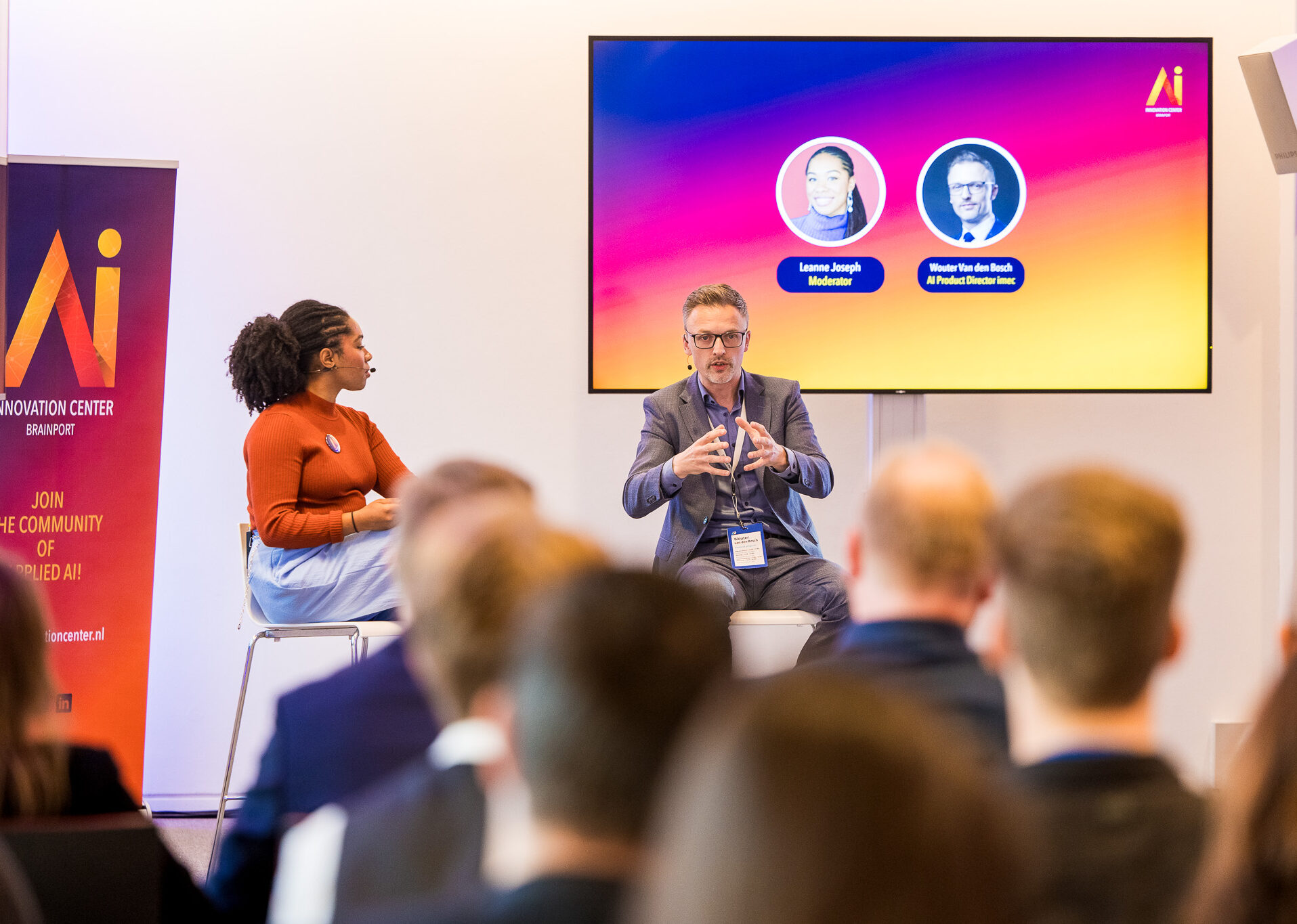
The afternoon continued with Wouter Van den Bosch, product director AI at imec, who addressed a question raised earlier in the hall: how to manage the spiraling compute and token costs of AI. Drawing on his leadership of imec’s AI stack initiative, Van den Bosch explored how co-optimizing AI workloads with underlying semiconductor and hardware infrastructure is critical to keeping enterprise AI both economically viable and energy-efficient.
Referring to the different layers of the AI stack as “layers of the cake,” Van den Bosch explained how optimizing these layers can have a significant impact on costs. In one experiment, simply replacing the agent harness, the software surrounding a large language model, resulted in 50% lower costs for comparable tasks. However, the optimal combination can change within months as models and software evolve. He advised organizations to examine individual use cases and consider switching to alternative infrastructure one step at a time, rather than replacing their entire AI workload at once.
Closing out the technical sessions, Abdu Mahmoudi (Senior Partner Solutions Architect at Amazon Web Services) and Miriam Sanchez (Solution Engineer at Snowflake) tackled the “last mile” problem of moving autonomous AI agents from proof-of-concept to reliable production.
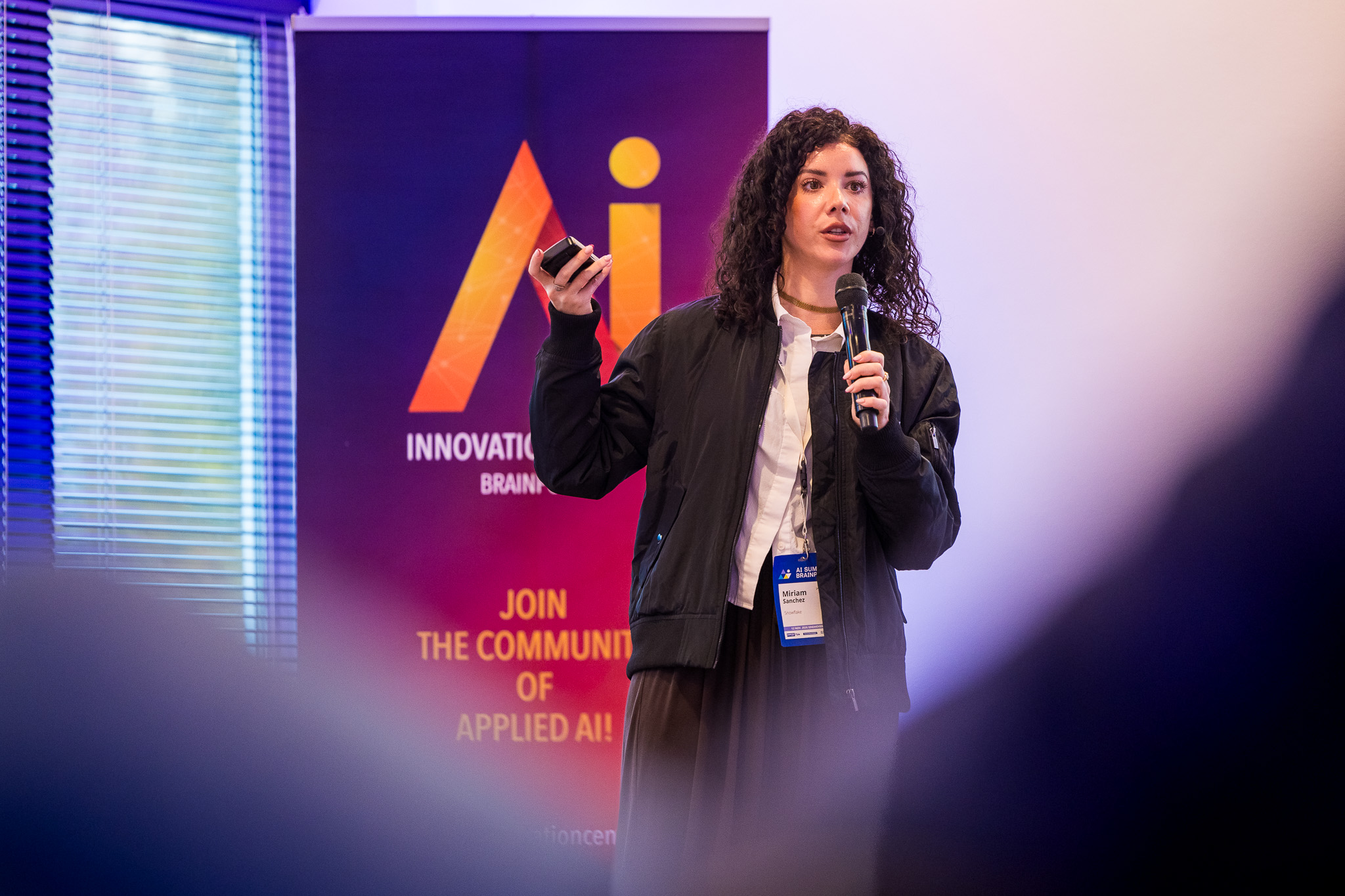
Using the historical adoption of the passenger elevator, which took 40 years to gain public trust after adding emergency phones, mirrors, and music, Mahmoudi outlined the architectural guardrails required for enterprise agents. It’s all about full observability, least-privilege security, human-in-the-loop confidence routing, and deterministic policy checks. Sanchez followed by breaking down the three layers of enterprise context. Even if finance and sales agents pull from the same clean database, they will calculate “gross margin” differently unless governed by a unified business ontology and an intent layer (such as Snowflake’s Cortex Sense) that understands organizational pragmatics.
The real competitive advantage
As Leanne Joseph and Philipp Werle wrapped up the afternoon before sending the crowd to the networking drinks, a clear consensus emerged across every session. AI has made building remarkably easy, fast, and cheap. Consequently, competitive advantage no longer lies in simply generating code or content; it lies in clean data context, human-centered design, rigorous governance, and the courage to redesign how people actually work.