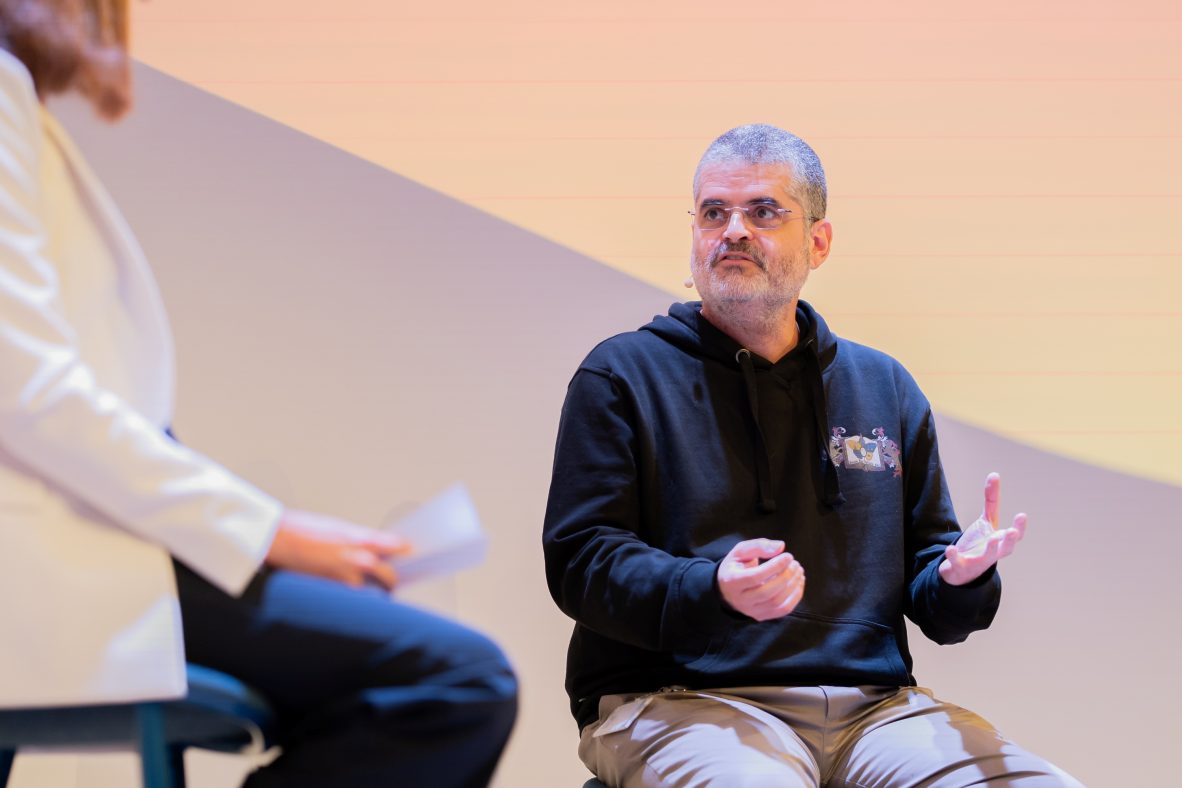
Fe+male Tech Heroes Role Model #61: Muriël van Alphen: ‘We’re doers who think or thinkers that do’
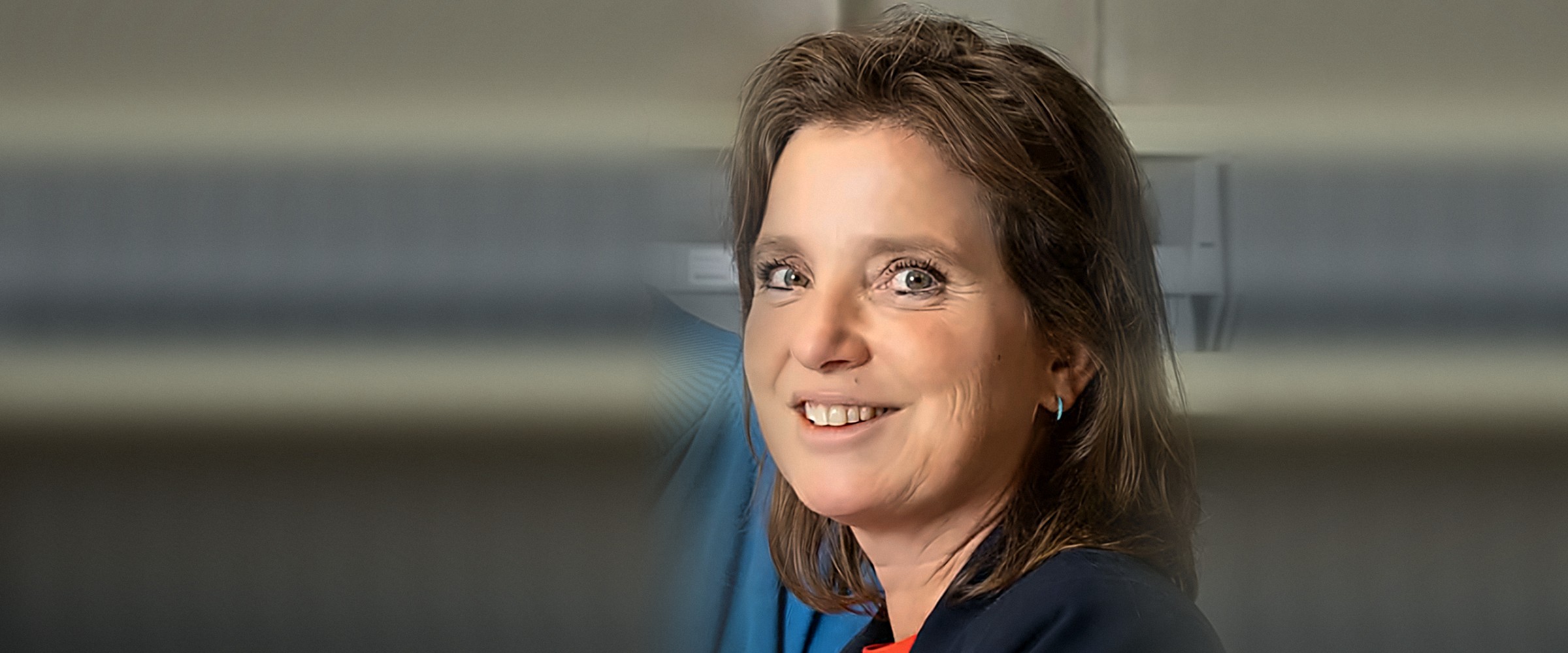
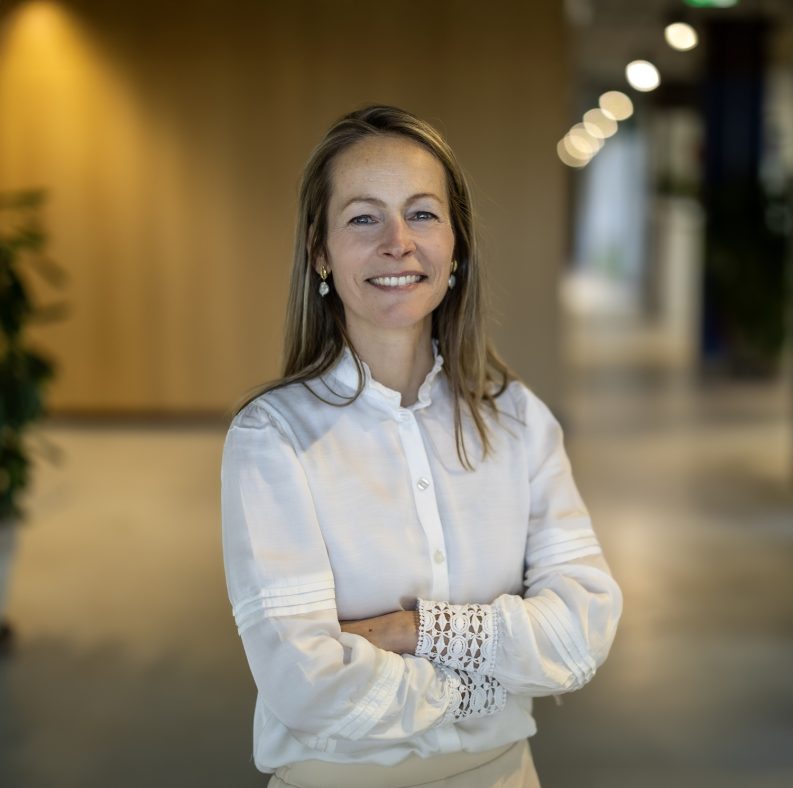
Education is key when building the next generation of women in tech. Just ask Muriël van Alphen. As Education Manager at Fontys Technology, Muriël guides and coaches the team leaders of the Industrial Engineering teaching staff and helps shape the content of the educational program for students working on associate and bachelor’s degrees. Beyond that, Muriël has been managing major developments at Fontys, including a growing focus on cultivating entrepreneurship among technical students.
“Everything changed since the first of January,” says Muriël. “We had this collaboration that emerged.” The change came as Fontys’ three institutes – engineering, industrial engineering and applied science – merged into Fontys Technology, operating under a single management team. There are now more than 500 colleagues under one umbrella and more responsibility for Muriël.
“I used to be just looking over the people in industrial engineering, and now I still have two teams for industrial engineering,” she said. “I added two different teams within the institute. One is the Center of Entrepreneurship.”
The center helps Fontys students develop their entrepreneurial skills and materialize their plans to start their own businesses. It’s a subject Muriël is personally passionate about and one she encourages her students to pursue. It’s fitting, since her spouse is an entrepreneur, as is one of her three daughters.
Speaking to students day-to-day at Fontys, she’s quick to remind them that a technical career can still be one that calls for self-advocacy, that “we still need to show a little bit more what we’re capable of. We’re not researchers, we’re doers. We’re doers who think or thinkers that do.”
A career path around the world
Given her many successes in academia, including lecturing in industrial engineering at Fontys and previously at Amsterdam and co-authoring a textbook in Logistics, Werken met Logistiek, 9th edition, with Hessel Visser, it may come as a surprise that Muriël once thought she didn’t want to teach. That wasn’t due to any issue with teaching itself. It was a teenager’s aversion to following her parents’ footsteps. Both of them taught: her father taught Dutch in a Dutch high school and her mother taught fashion and clothing design.
Instead, Muriël finished her degree in Industrial Engineering at Eindhoven University of Technology and went to work for Tibbett and Britten, a British logistics firm, a graduate role that took her across the Netherlands and the United Kingdom. It wasn’t her first time abroad; she’d already completed an Erasmus program in Finland, an internship in Italy and a study trip to India.
Her appetite for travel was part of the appeal. Along the way, she picked up four other languages, (French, Italian, German and English) calling herself someone who’s “really into international things.”
While at Tibbett and Britten in the UK, she had to get used to the “boy’s club” environment, but it was an experience she remembers fondly. “I was the woman behind all of those truck drivers,” she recalls. “They weren’t used to communicating with a woman they didn’t know and they couldn’t place my accent. That’s definitely a man’s world, especially within warehouses. So, for seven years I worked in logistics, including warehousing and international transport. And it was very nice.”
Working and studying across Finland, Italy and the UK helped prepare her to work with people from all backgrounds, just like the students she works with today. It was only when she and her husband settled permanently in the Netherlands that she made the switch to education and found that with its large, diverse international student population, teaching was a great fit after all.
“Because I have three daughters, I’ve noticed that if your daughter has a problem with math or physics, they say, ‘Oh, nice blonde girl, just choose something easier.’ They don’t push the girls toward the technical side.”
From brotherly advice to finding sisterhood
Ironically, though her reluctance to teach came from having two teachers as parents, it was still family who steered Muriël toward the technical education that shaped her career. Her “very mathematical” brother and later an econometrician himself – an applied economist who uses advanced mathematics, statistics, and computer science to quantify economic theories – pushed her to pick her course of study. “Why don’t you choose the most difficult things?” he asked her. “Because then you’re always free to choose.” She took his advice: math, physics, all the hard subjects. “He was right.”
In the broader world, Muriël has noticed her own daughters aren’t always encouraged the way she was, but she works to balance that. “Because I have three daughters, I’ve noticed that if your daughter has a problem with math or physics, they say, ‘Oh, nice blonde girl, just choose something easier.’ They don’t push the girls toward the technical side,” she says. That’s where her own efforts come into play.
Happily, Muriël has a supportive team of other women with whom she can talk about these struggles. Since her time as a university student, she’s been involved with a sorority for professional women. While not a founder, she was one of its first members. “From the start at Eindhoven, I had a strong sisterhood. We were there drinking beer with the men, but we always had our own little circle.”
The sorority continues to grow, with about 150 members and alumni ranging in age from 18 to late 50s. They meet for bi-annual networking events, where, she says, “There’s always this talk about how to survive in a man’s world. We always have discussions about that.”
While there is a generational divide, Muriël is still ready to learn from her younger “sisters.” When it comes to handling an uncomfortable situation, she says, “I’m very easy and I’m very quick with my mouth, so if somebody says something, I’m always easy about it. But the girls who are not so easy with their expressions say, ‘Don’t make jokes about it. Don’t try to overdo it. Just give them the mirror and say they’re wrong.
“That would help everyone.’”
Her three daughters, meanwhile, are each navigating their own paths. Her eldest is pursuing veterinary studies abroad, her middle daughter is growing a beauty business, and her youngest is looking into social work programs. While Muriël describes the trio as “a handful,” she does so with a laugh. “What can I say? They know what they want.” Wonder where they get that?