Get to know the AI Innovation Center and explore the broader AI & Software ecosystem at High Tech Campus Eindhoven, including our ecosystem map featuring 60+ companies.
To overview
The foundation for European AI sovereignty lies in Eindhoven: ‘This is where hardware and software come together’
Can Europe build its own sovereign AI stack? This question dominates the European tech agenda. While discussions about strategic autonomy often remain confined to policy papers and geopolitical ambitions, the practical reality has been taking shape at High Tech Campus Eindhoven (HTCE) for years. As the AI Innovation Center celebrates its fifth anniversary, the message is pragmatic but crystal clear: the key to European AI independence lies in Brainport Eindhoven, where advanced chips, photonics, intelligent software, and industrial adoption come together.
Europe does not necessarily need to dominate every individual layer of the AI stack, but it must stop being merely a consumer and start creating strategic value of its own. After all, Europe has the ingredients: world-class talent, a strong single market and a leading manufacturing industry. This is a message being heard increasingly often. Fabrizio del Maffeo, CEO of Axelera AI, which is headquartered at the AI Innovation Center, recently put it well: what is missing is a willingness to take risks, confidence in European technology, and the so-called golden circle, in which established industries and governments actively buy from and invest in European startups.
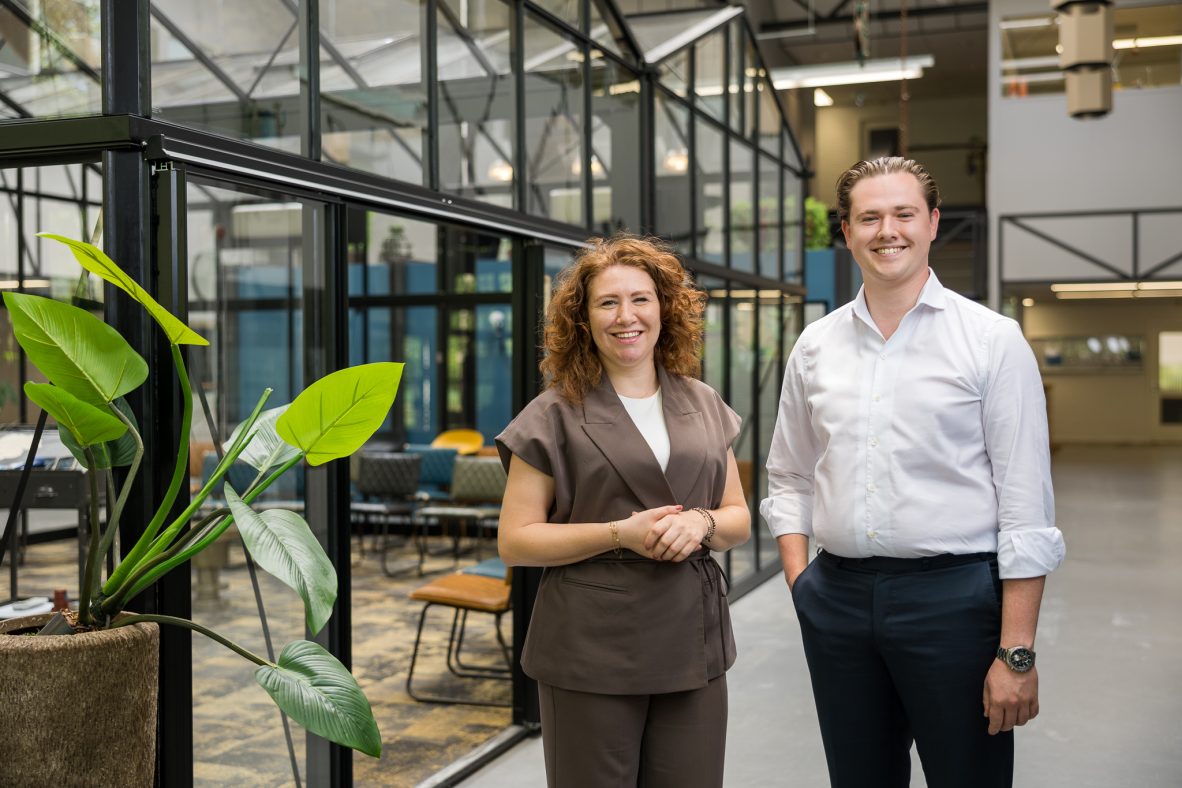
At High Tech Campus Eindhoven, Head of Strategy Paul van Son and AI Innovation Center Manager Philipp Werle agree with this analysis. This is precisely where the Campus ecosystem offers an answer. “European AI sovereignty starts with the foundations,” says Van Son. “Everyone talks about software models, but AI ultimately runs on physical infrastructure: semiconductors, energy-efficient edge chips and integrated systems. We have deep roots in semiconductors and photonics, and we’re building on this foundation. We have a great position to play a key role in Europe’s full stack ambitions.”
“We have deep roots in semiconductors and photonics, and we’re building on this foundation. We have a great position to play a key role in Europe’s full stack ambitions.”

Head of Strategy
–
High Tech Campus Eindhoven
Werle emphasizes the role of the Campus: “We are not the ones inventing the technology. Our job is to provide the very best entrepreneurs, chip designers, and system architects with the ideal conditions to scale. And it works because this is where top talent finds each other. As Bernardo Kastrup of EUCLYD recently put it so well: ‘The Campus is a pretty great pond to fish in.’”
The persistent image of the ‘hardware region’
Five years after its launch, the AI Innovation Center at HTC 5 is now home to more than 40 AI companies. It has grown into the largest physical AI cluster in the Netherlands. Yet the region still regularly encounters a persistent stereotype. “People still often see us as a purely hardware-focused region,” Werle observes.
The reality is more nuanced. Van Son explains: “Complex hardware cannot function without intelligent software. Software is also playing an increasingly important role in the business models of hardware companies like equipment manufacturers and chip designers. Software and AI today are integrated parts of hardware companies. ”

Credits: Datacation
Physical proximity and an open platform
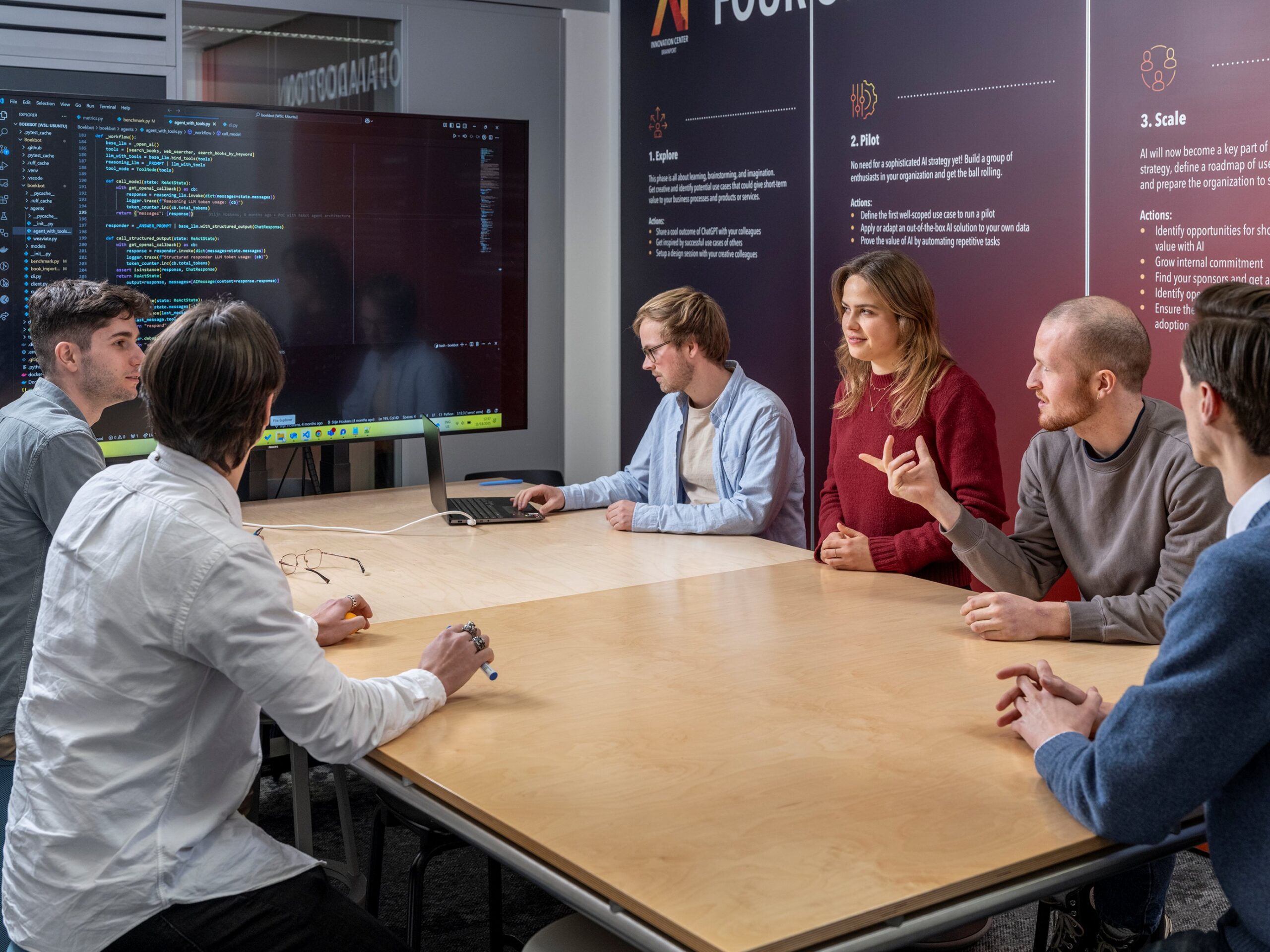
The AI Innovation Center was established in 2021 to bring AI companies and expertise together and has since become a blueprint for other specialized hubs on Campus, including those focused on spatial computing and medtech. At the heart of its success is what the Center calls “the power of proximity.” Companies become part of an active community where spontaneous encounters and planned meetings go hand in hand.
Take Ocuma, a startup developing computer vision systems to detect early signs of drowning in swimming pools. Werle explains: “Their cloud computing costs were skyrocketing. With Axelera AI just down the hall, they were able to run their model locally on Axelera’s chip. This significantly reduces costs and latency. These kinds of collaborations happen because we connect them, or they run into each other at the coffee machine.”
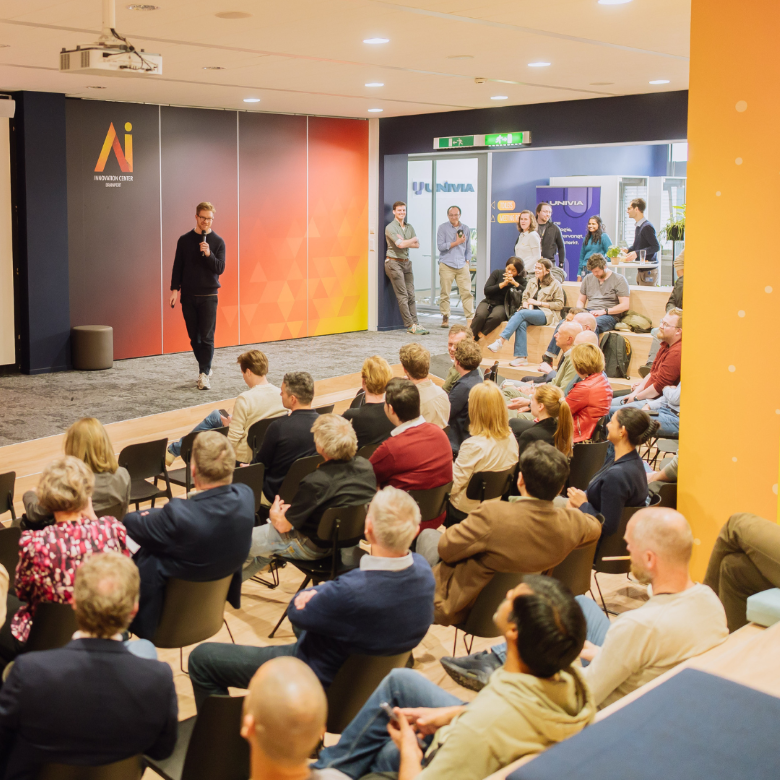
Knowledge sharing and community building are not occasional activities, but part of the vision of being an open platform. A good example was the AI Meet-Up XL in May 2026, which focused entirely on European AI sovereignty: how do we develop independent technologies, data infrastructure, and AI models to achieve European sovereignty?
“We constantly create opportunities for new connections. We proactively connect startups with investors through partnerships with the Brabant Development Agency (BOM), provide access to accelerator programs through organizations such as imec.istart, and bring young tech companies directly to the table with major industrial players.”
This local proximity also leads to international collaboration. ITEA, which coordinates international software R&D projects, deliberately chose to establish itself among the AI companies. Werle: “Four companies based at the Center are now working with international partners on new R&D projects through ITEA.”

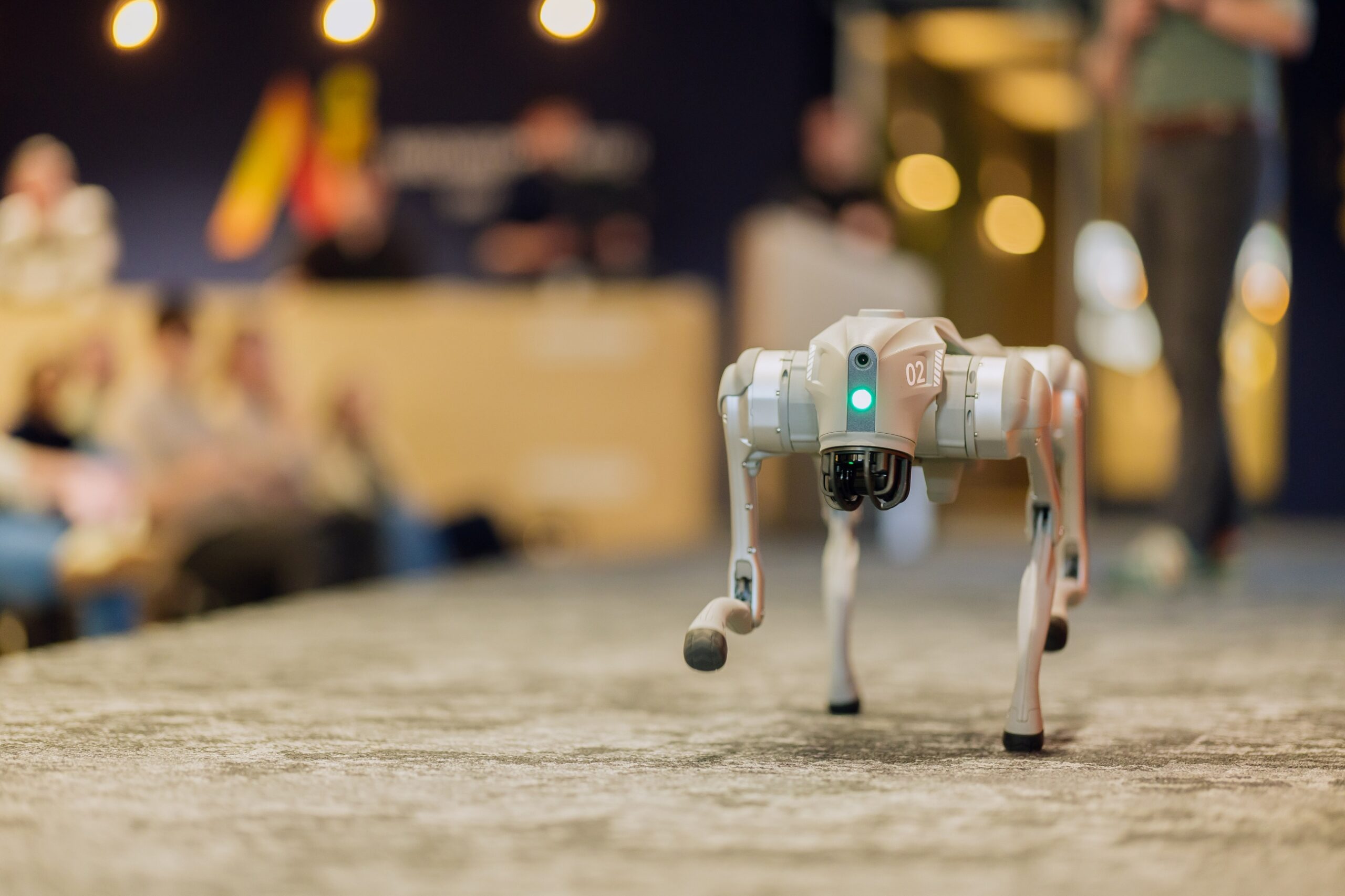
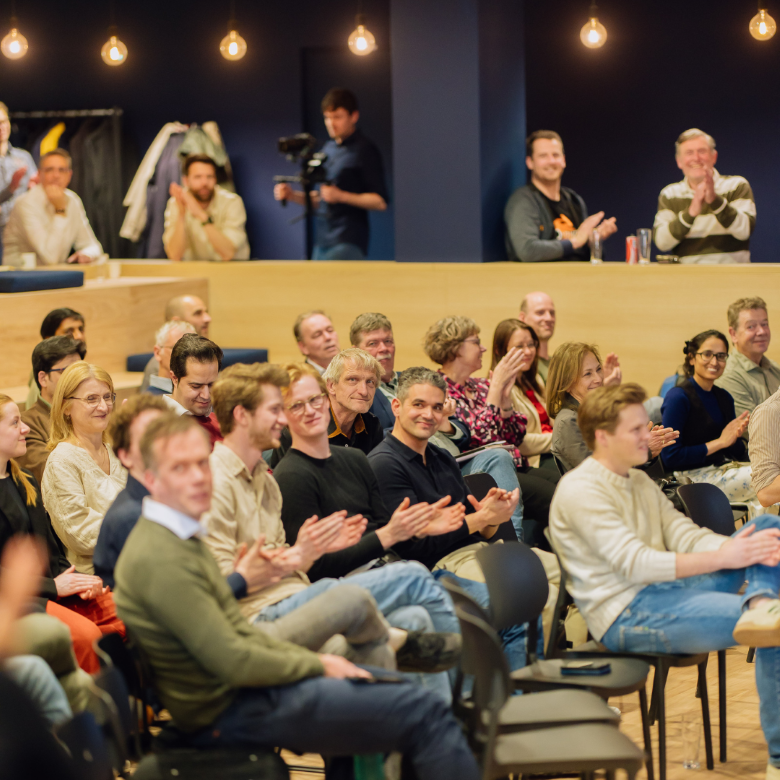
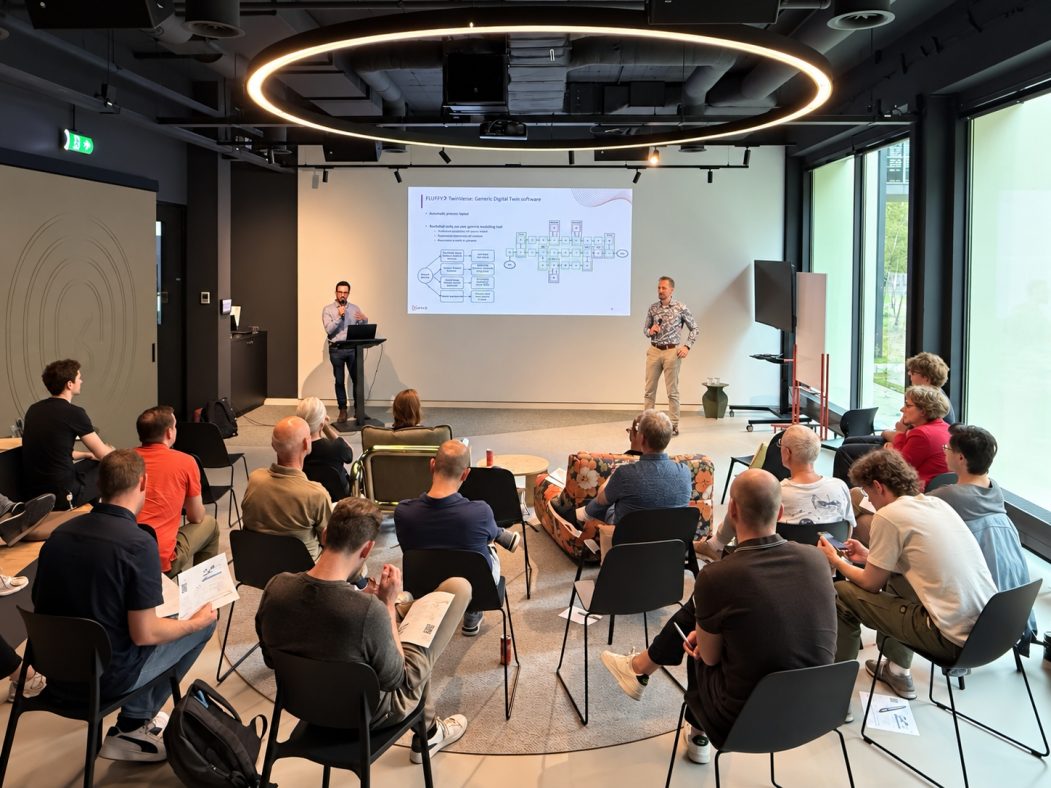
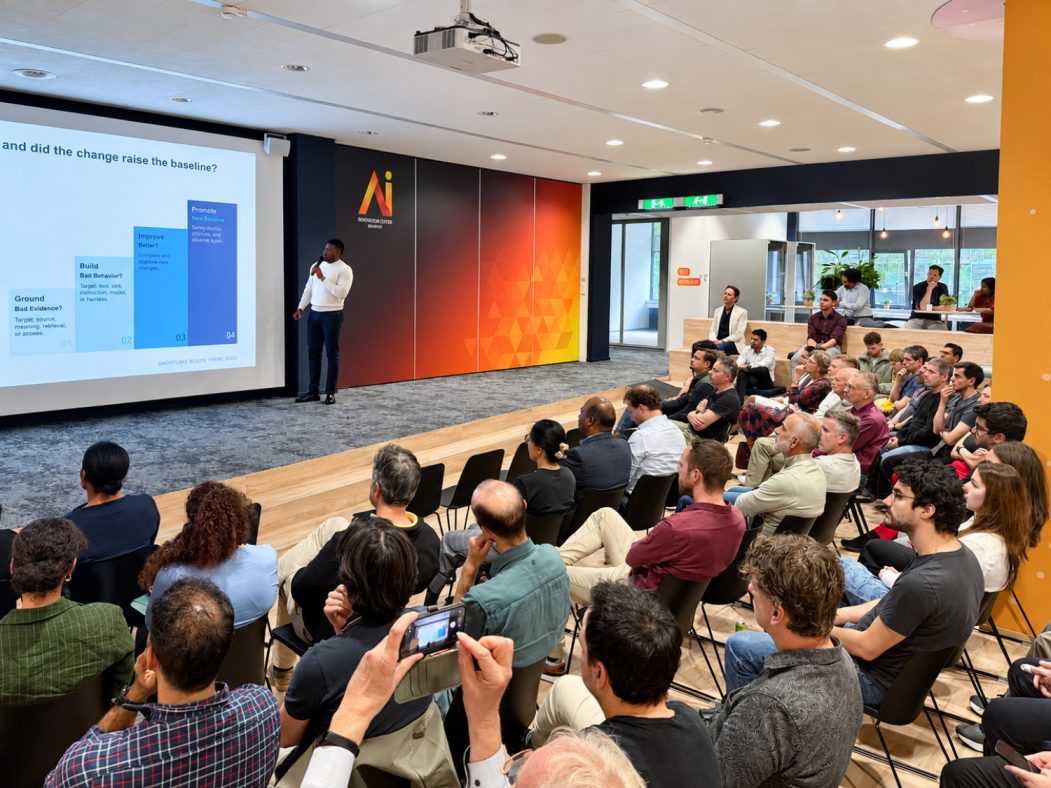
Left: the AI Meet-Up XL 2026 on European AI sovereignty. Right: Physical AI in action, with a robot dog using Axelera AI’s edge AI technology for real-time computer vision.
The competitive edge: Physical AI
Following the waves of chatbots and virtual agents, global AI development is entering a new, critical phase: physical AI. Artificial intelligence is moving beyond the cloud and taking physical shape in autonomous vehicles, industrial robots, sensors, and medical devices. And it is precisely at this intersection that Brainport Eindhoven holds a global competitive advantage.
“This is a big opportunity for our region,” Van Son predicts. “All the capabilities needed for physical AI have been deeply rooted here for decades: advanced sensor technology, edge chips, integrated photonics and highly complex systems engineering. The Dutch government also recently acknowledged this in its national AI vision.”
On Campus, this is already happening in practice. Startup naext develops spatial AI for physical environments. Together with Sorama, the company combines this intelligent interface with visual and acoustic sensors, enabling so-called “robot dogs” to patrol complex factories completely autonomously. Meanwhile, chip giants such as NXP Semiconductors are testing their latest edge AI processors directly on flying drones.
Expanding to more than 80 AI companies
The strength of this foundation is reflected in the substantial investment companies on Campus are currently attracting. Since its founding, Axelera AI has raised more than €450 million in funding to bring its European edge AI technology to markets worldwide. Euclyd, meanwhile, recently secured more than €200 million in growth funding. These investment figures demonstrate that international investors recognize the strategic value of Brainport’s AI stack.
But the AI Innovation Center is firmly focused on the future. In line with the broader European competitiveness agendas outlined in the Draghi and Wennink reports, the ambition is clear: to further develop the ecosystem and expand its physical community to more than 80 leading AI companies.
High Tech Campus Eindhoven is taking an even broader approach. The goal is to continuously provide the space and the right environment for startups not only to get off the ground, but also to industrialize their technologies, scale rapidly and become Europe’s next tech champions.
“The deep hardware and systems expertise we have here is not something you can replicate elsewhere in just a few years,” Werle concludes. “But building an intelligent software and AI layer on top of that robust technological foundation is possible. Europe does not have to stand by and watch others shape the future. By bringing deep tech hardware and intelligent software together under one roof, we are laying the foundation for a sovereign European tech future right here.”
Written by Bart Brouwers (iO+).